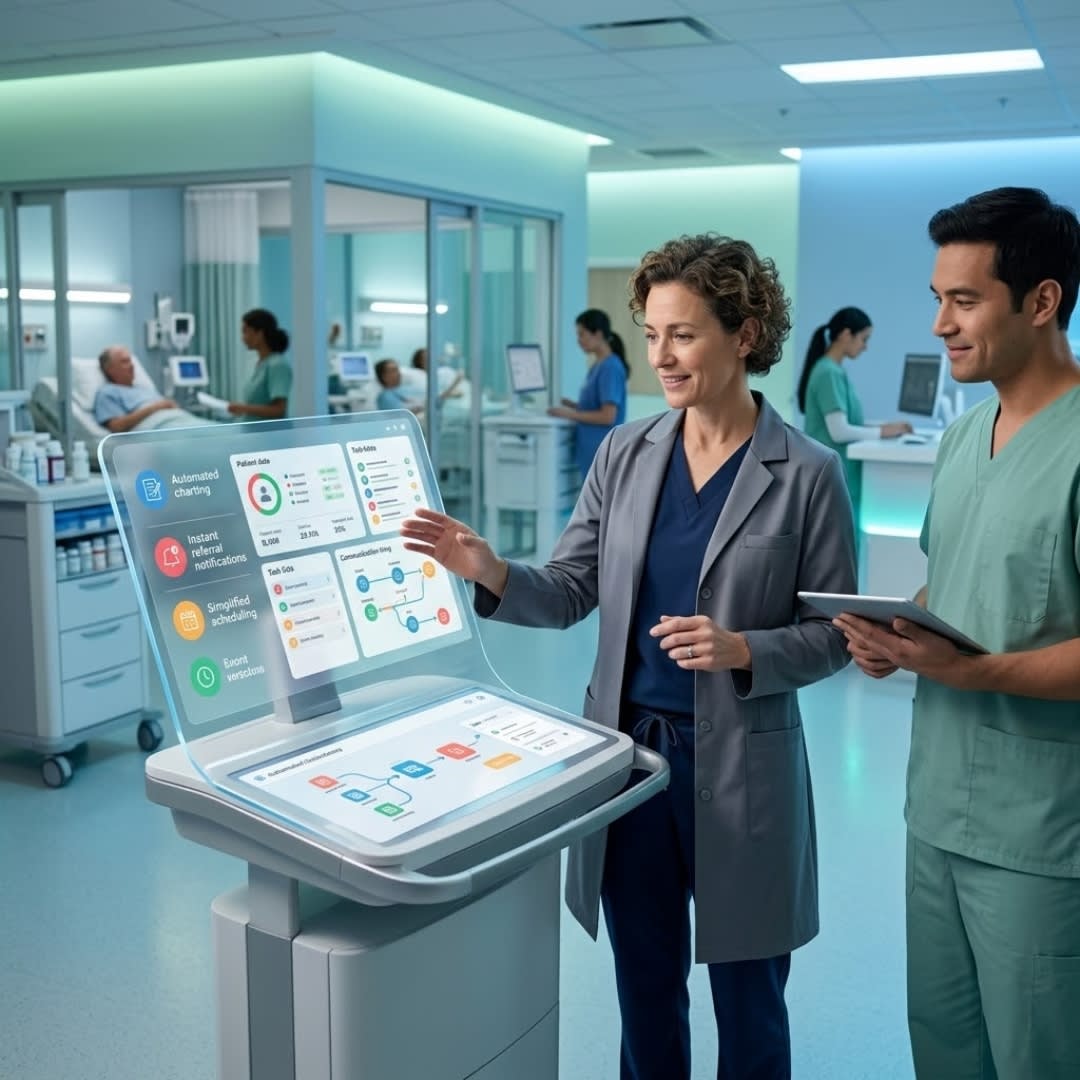
Healthcare Operations Are Broken and Clinical Workflow Automation Is Fixing Them
Healthcare has a serious operational problem. Clinicians spend more time on documentation and administrative tasks than on actual patient care. Budgets are being consumed by manual processes that technology could handle in seconds.
Administrative costs now account for more than 40 percent of total hospital expenses and physician burnout is hovering around 43 percent nationwide. Research suggests automation could eliminate up to $360 billion in wasteful spending across the US healthcare system.
According to Deloitte's 2026 State of AI Report, nearly three quarters of healthcare and life sciences organizations say AI has improved efficiency and productivity.
For healthcare organizations looking to reduce costs, retain staff, and improve patient outcomes, clinical workflow automation is no longer a future investment. It is an immediate operational priority.
The Scale of the Problem in 2026
The numbers make the case for automation impossible to ignore:
- In 2023, hospital administrative costs reached $687 billion compared to $346 billion in direct patient care — a ratio of roughly 2 to 1.
- Nearly half of hospitals report vacancy rates exceeding 10 percent with administrative roles seeing annual attrition rates between 20 and 35 percent.
- Healthcare providers are saving $18 billion annually by adopting workflow automation for administrative tasks.
- The global clinical workflow solutions market is growing from $11.96 billion in 2024 to a projected $42.7 billion by 2034.
- The healthcare and pharmaceutical segment is growing fastest at 11.22 percent CAGR driven by EHR mandates and clinical trial digitization.
What Clinical Workflow Automation Actually Covers
Clinical workflow automation goes far beyond basic scheduling or billing. In 2026 it covers:
- Prior authorization processing automated end to end with AI handling submissions, follow-ups, and approvals
- Referral intake consolidated from fax, web forms, and EHR messages into a single automated pipeline
- AI-powered documentation through ambient scribes that generate clinical notes from patient conversations
- Insurance eligibility verification running in real time without manual staff involvement
- Patient scheduling and appointment reminders handled autonomously across multiple channels
- Care gap identification surfacing patients who need follow-up before outcomes deteriorate
- Compliance reporting generated automatically from existing clinical data without manual compilation
Healthcare workflow automation has moved past the pilot phase. The technology that handles referral intake, prior authorization submission, eligibility verification, scheduling, and care gap closure now runs in production at thousands of practices.
The Impact on Clinicians and Staff
Clinical workflow automation is not replacing clinicians. It is replacing the nonclinical work and the aspects of their job that for years have been stealing their time and attention.
What automation delivers for clinical and administrative teams:
- Clinicians reclaim hours previously lost to documentation and administrative follow-up
- Administrative staff focus on complex patient interactions instead of repetitive data entry
- Scheduling teams manage exceptions rather than manually booking every appointment
- Finance teams receive cleaner claims with fewer errors and faster reimbursement cycles
- Leadership gains real-time operational dashboards instead of waiting for weekly manual reports
Workflow automation can deliver 30 to 50 percent cost reductions in US healthcare claims processing and hospitals automating administrative tasks report a 30 percent workload reduction for staff.
Where Automation Works Best and Where It Does Not
Not every clinical workflow is ready for full automation. The highest-value areas in 2026 include:
- High-volume, rule-based processes like eligibility checks and prior auth submissions
- Repetitive documentation tasks that follow consistent structured formats
- Patient communication workflows including reminders, follow-ups, and intake forms
- Reporting and compliance documentation generated from existing structured data
Areas that still require significant human involvement:
- Clinical decision-making requiring genuine judgment about diagnosis or treatment
- Complex emotional interactions with patients and families in sensitive situations
- Multi-step exception cases that span departments with no predictable resolution path
What Healthcare Organizations Need to Get Right
Successful automation initiatives require more than technology. They also require workforce readiness, operational planning, and ongoing support. Healthcare leaders should view automation as part of a broader operational strategy rather than a standalone technology project.
Organizations that achieve the best results focus on:
- Starting with workflows that have clear rules and measurable outcomes
- Building interoperability between EHR, payer, and scheduling systems before automating across them
- Investing in staff training to work alongside automated systems confidently
- Establishing governance frameworks that maintain clinical oversight at every stage
- Partnering with a dedicated healthcare technology team that understands both clinical workflows and compliance requirements from day one
Healthcare organizations that treat automation as a strategic investment rather than a tech experiment are positioning themselves for sustainability. Those that do not are watching their margins erode and their best people leave.