
School Administration in 2026 Looks Nothing Like It Did Five Years Ago
Managing a school used to mean mountains of paperwork, disconnected systems, and administrators buried in manual processes. That model is being replaced entirely.
The Student Information System market is expected to reach $12.13 billion by 2026, registering a CAGR of 15.5%. This growth is not driven by trends. It is driven by institutions that have seen firsthand what a smart SIS development platform delivers when it is built around how schools actually operate.
In 2026, student information systems are no longer just record-keeping tools. They are the operational backbone of modern educational institutions.
What a Smart Student Information System Does in 2026
Artificial intelligence is transforming school management systems from reactive tools to proactive platforms capable of predicting trends and identifying at-risk students before academic issues become critical.
A modern SIS handles far more than attendance and grades:
- Real-time enrollment tracking and admissions management
- Automated attendance, grade entry, and report generation
- AI-powered identification of at-risk students before performance drops
- Parent and teacher communication through a single unified platform
- Timetable scheduling with automatic conflict detection
- Compliance reporting aligned to regional education authority requirements
- Data dashboards giving administrators instant visibility into institutional performance
The Real Impact on School Administration
The operational difference a smart SIS makes is measurable. Teachers can spend less time on paperwork thanks to automated grade and attendance entries. Scheduling becomes hassle-free, leading to fewer conflicts for classes and exams. Students benefit when their records are accurate and accessible. Parents gain peace of mind through instant updates and direct communication with schools.
For administrators specifically the gains include:
- Fewer manual errors across student records, fees, and academic data
- Faster report generation that previously took days now completed in minutes
- Centralized data that eliminates duplicate systems and disconnected spreadsheets
- Better resource planning based on real-time enrollment and performance data
- Reduced administrative overhead allowing staff to focus on student outcomes
Why Off-the-Shelf SIS Platforms Are Falling Short
Generic SIS platforms are built for the broadest possible audience. They work for standard workflows but fail the moment an institution has specific processes, compliance requirements, or integration needs.
Common limitations of off-the-shelf SIS platforms:
- Rigid workflows that force schools to adapt their processes to the software
- Limited integration with existing LMS, finance, and communication tools
- Licensing costs that scale with every additional user or module
- Compliance gaps for institutions in specific regional regulatory environments
- No flexibility to add features that reflect how the institution actually operates
This is why a growing number of schools and universities are partnering with EdTech development teams to build custom SIS platforms designed around their specific operational needs.
Key Features Every Modern SIS Must Have in 2026
When evaluating or building a student information system, these features are non-negotiable:
- AI-powered analytics that flag at-risk students and surface actionable insights
- Cloud-based architecture for reliable access across all devices and locations
- Open API support for seamless integration with LMS, payment, and communication tools
- Role-based access control for students, teachers, administrators, and parents
- Automated compliance reporting aligned to FERPA, COPPA, and regional standards
- Mobile-first design for accessibility across every device students and parents use
Custom SIS vs Off-the-Shelf: Which Is Right for Your Institution
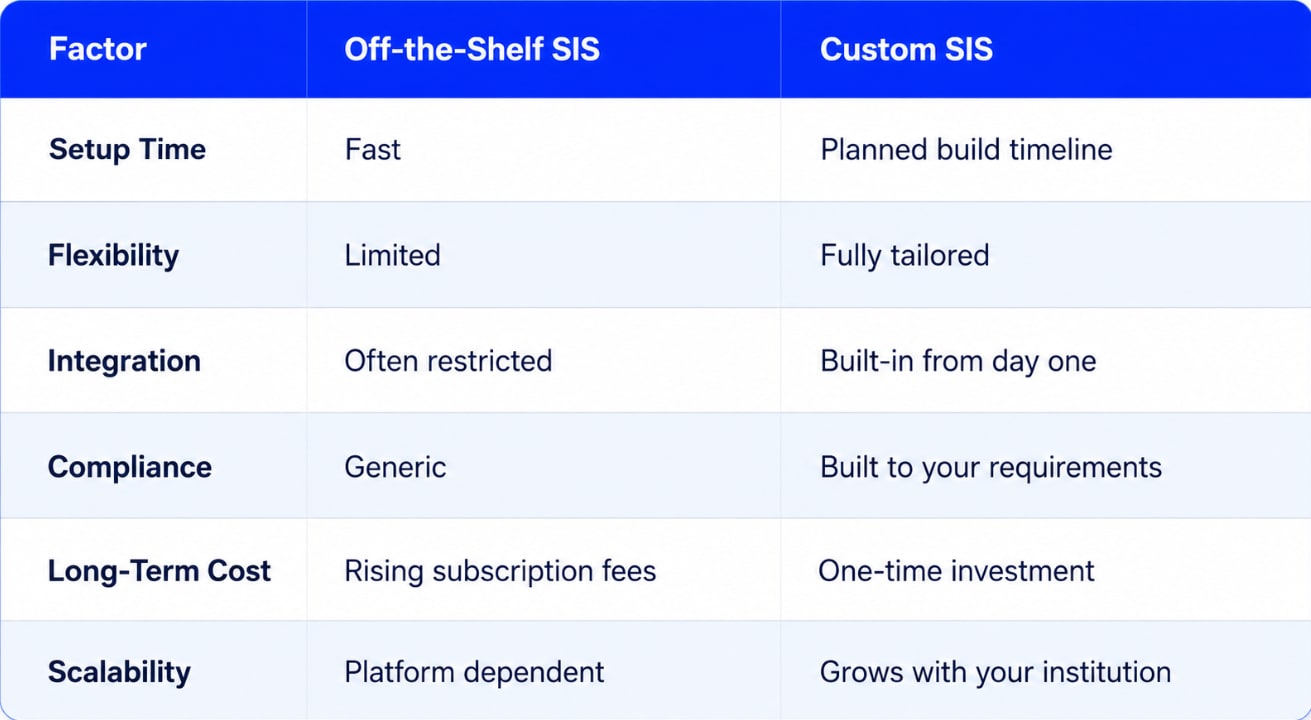
For institutions with standard needs and tight timelines, off-the-shelf is a reasonable starting point. For institutions with unique workflows, specific compliance obligations, or plans to scale, a dedicated EdTech development team building a custom platform delivers significantly more long-term value.