Overview
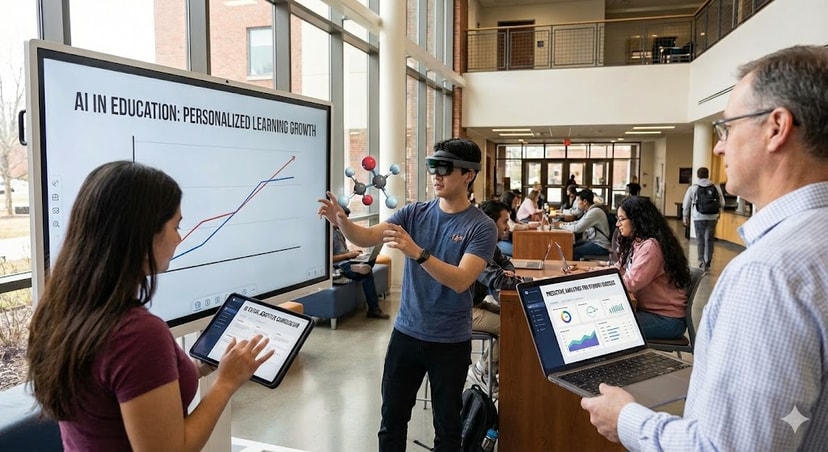
Artificial Intelligence is reshaping the education ecosystem. Today, AI EdTech platforms can personalize curriculum, automate assessments, generate content, analyze performance, and help teachers make informed decisions.
The potential is enormous. Yet the adoption of AI in education also comes with genuine concerns from data privacy to cost barriers, educator readiness, and ethical transparency.
This blog explores both sides: the powerful opportunities AI brings to education, and the challenges institutions must address to adopt it responsibly.
Key Opportunities in AI EdTech
1. Data-Driven Personalized Learning
AI offers personalized education by analyzing student performance, learning styles, pace, and strengths. Adaptive learning engines recommend lessons, adjust difficulty levels, and curate study material that caters to each learner's needs.
Benefits include:
Improved comprehension
Higher retention
Reduced learning gaps
Better student engagement
By turning learning into an individualized experience, AI helps every student progress on their own path.
2. Smart Content Creation and Curriculum Support
AI technology supports educators by helping them create interactive content, quizzes, lecture support material, course summaries, and translations. This reduces manual effort and keeps learning resources updated and relevant.
As schools, universities, and online programs move toward digital-first learning, many are adopting modern edtech ai tools to build, automate, scale, and enhance course content delivery in smarter ways.
Digital content also improves accessibility, allowing institutions to expand learning without proportional increases in time or cost.
3. Automated Evaluation and Assessments
AI-powered grading and exam evaluation systems reduce teacher workload and drive more consistent outcomes. Whether it's objective tests or analytical essays, AI can process and evaluate submissions in seconds.
Advantages include:
Faster grading cycles
Bias-free assessment
Instant performance insights
This frees educators to focus on coaching, mentoring, and creative instruction.
4. Improved Learning Analytics and Predictive Insights
Artificial intelligence provides educators with real-time dashboards that track progress, subject comprehension, attendance, engagement levels, and behavioral patterns.
These insights support early intervention allowing institutions to identify students who may fall behind, and offer personalized learning support before issues escalate.
5. Inclusive and Accessible Education
AI opens the door to more inclusive learning environments.
Assistive technologies such as text-to-speech, closed captioning, content simplifiers, and screen readers enable students with visual, hearing or cognitive challenges to access education more effectively.
This ensures technology supports fairness and equal opportunity.
Key Challenges in AI EdTech
1. Data Privacy and Ethical Use
One of the most serious concerns is protection of student data. AI systems rely on personal performance, attendance, demographics, and behavior raising ethical questions around usage, storage, and third-party access.
Institutions must establish clear policies regarding:
Data usage
Retention timelines
Consent structure
Security safeguards
Responsible implementation is critical for trust.
2. Teacher Preparedness and Technical Training
AI is only effective when teachers know how to use it.
Many educators still lack exposure to AI-powered tools, training modules, and digital-first teaching methods. Professional development programs are essential so teachers can confidently adopt AI systems, interpret analytics, and guide students through digital learning experiences.
3. Cost of Technology Adoption
While AI solutions can reduce long-term operational load, initial implementation can be expensive especially for institutions with limited budgets.
Costs include:
Platform subscriptions
Digital infrastructure
Training resources
System integrations
Without proper planning, the financial barrier can slow adoption, especially in low-resource regions.
4. Algorithmic Bias and Transparency
AI systems learn from historical data. If the data is unbalanced or limited, results can be inaccurate or biased. This can directly impact student evaluations, recommendations, or performance predictions.
Building transparency, explainable models, and unbiased datasets is essential to ensure fair academic outcomes.
5. Over-Reliance on Technology
AI is powerful, but it cannot replace human value in education.
Critical thinking, emotional intelligence, creativity, empathy, and classroom connection are deeply human. If institutions rely too heavily on AI, meaningful teacher-student interaction may decline.
Successful implementation means balancing automation with human mentorship.
Finding the Right Balance
AI has the potential to accelerate education transformation but its use must be thoughtful, ethical, and gradual.
The most successful models are the ones where leaders, teachers, technologists, and policymakers work together to design AI systems that support learning outcomes without compromising privacy or human interaction.
Education should remain deeply human. AI simply makes it smarter, faster, and more accessible.