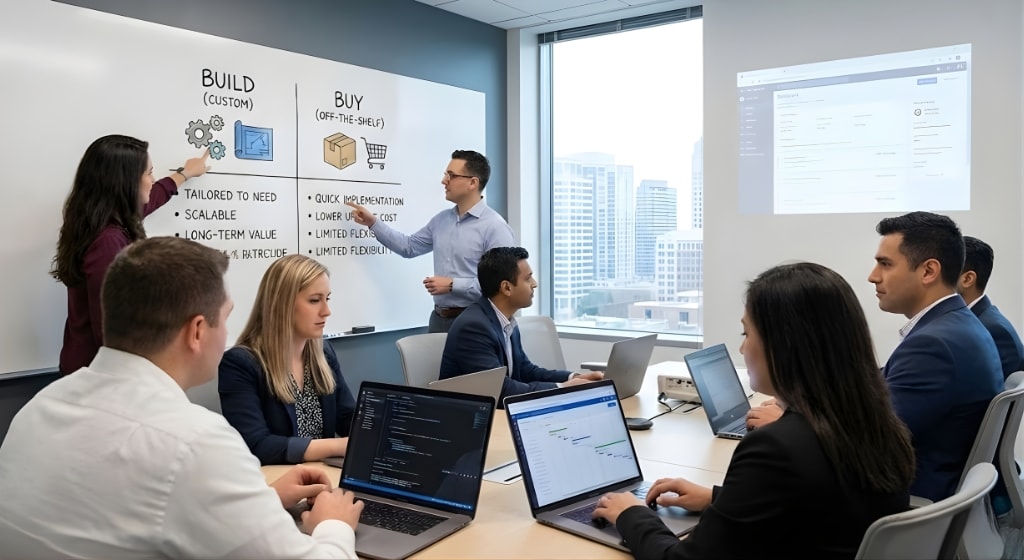
Choosing a learning management system is not just a software decision, it's a long-term investment in how your organization learns, scales, and performs. Many companies initially choose off-the-shelf LMS platforms because they promise quick deployment and lower upfront costs. However, as learning needs evolve, these systems often reveal their limitations.
Custom LMS development offers a fundamentally different approach. Instead of adapting your workflows to fit a generic platform, the system is built around your business, learners, and goals.
Why the Build vs Buy Decision Matters
Understanding Off-the-Shelf LMS Platforms
What Off-the-Shelf LMS Tools Do Well
Off-the-shelf LMS platforms are designed for mass adoption. They typically offer:
Pre-built course management
Standard reporting dashboards
Subscription-based pricing
Quick setup
For basic internal training or short-term programs, this can be sufficient.
Where Off-the-Shelf LMS Platforms Fall Short
As organizations grow, challenges emerge:
Limited customization
Rigid user roles and workflows
Expensive add-ons for advanced features
Restricted integrations with CRM, HR, or ERP systems
Per-user pricing that escalates quickly
These limitations often force organizations to compromise on learning outcomes.
What Makes Custom LMS Development Different
Custom LMS platforms are designed to reflect how your organization actually operates. Every feature from user journeys to reporting logic is purpose-built.
Tailored Learning Experiences
Custom platforms support personalized learning paths, role-based access, and adaptive content delivery. Learners see only what's relevant to them, improving engagement and completion rates.
Full Control and Ownership
Unlike subscription-based LMS platforms, a custom LMS gives you full ownership of the system, data, and roadmap. You decide when and how the platform evolves.
Cost Comparison: Short-Term Savings vs Long-Term ROI
Off-the-shelf LMS platforms often appear cheaper initially, but ongoing subscription fees, customization costs, and scalability limits can outweigh the upfront savings.
Custom LMS development requires a higher initial investment, but it eliminates recurring license fees and reduces long-term operational costs especially for growing organizations.
Scalability and Integrations
A major advantage of custom platforms is seamless integration with existing systems. Whether it's HR software, CRM tools, or analytics platforms, custom LMS solutions connect learning data with business performance.
Organizations that need flexibility, scalability, and long-term efficiency often turn to custom lms development services to avoid being locked into restrictive platforms.
Which Option Is Right for You?
Choose off-the-shelf if your needs are basic and unlikely to grow
Choose custom LMS development if learning is a strategic function tied to growth, compliance, or performance