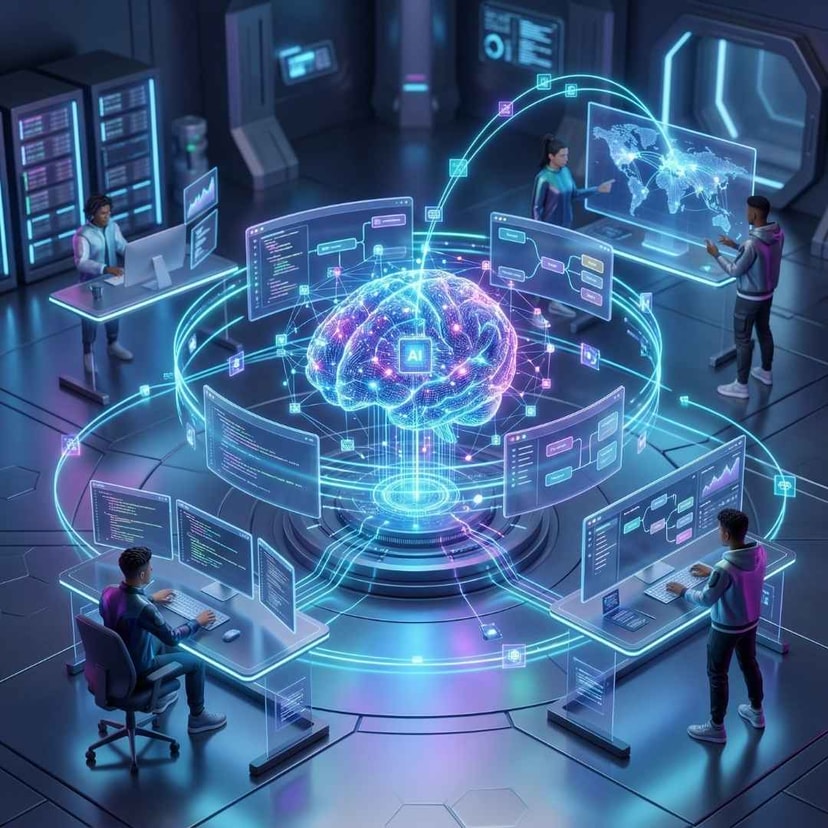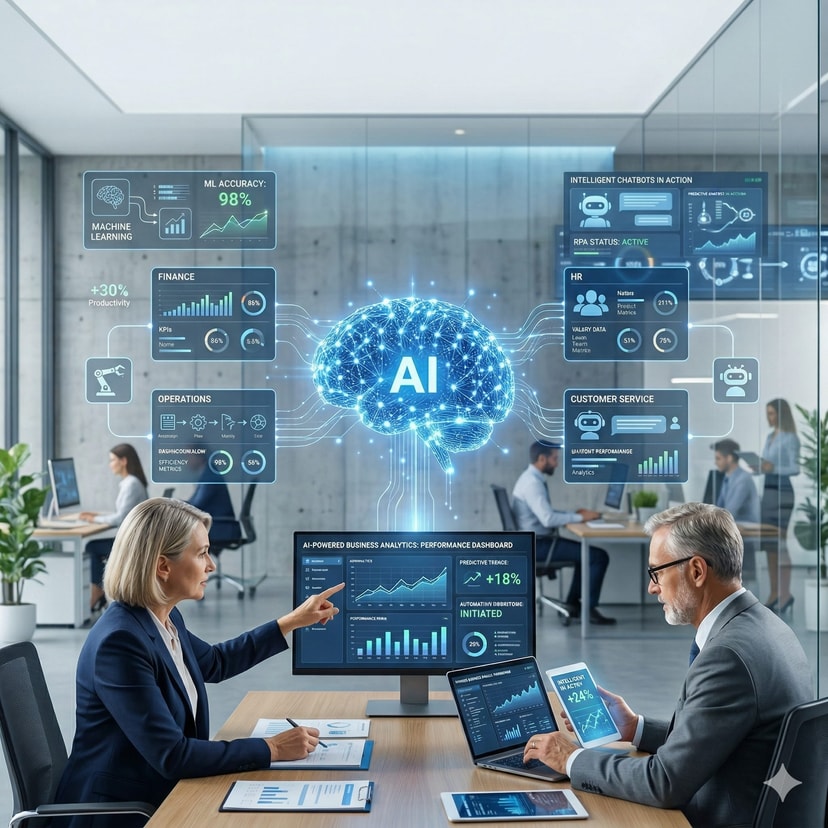
The Workplace Has Changed Forever and Agentic AI Is the Reason
In 2026, agentic AI is no longer a concept being tested in labs or discussed in boardrooms. It is actively running workflows, making decisions, and executing tasks across businesses of every size and industry.
The shift happened faster than most predicted. Companies that once debated whether to adopt AI are now competing to keep up with those that already did.
What changed everything was not just smarter AI. It was AI development services that built systems capable of acting, not just answering..
What Agentic AI Actually Did to the Workplace in 2026
Unlike earlier AI tools that responded to prompts, agentic AI systems in 2026 are:
- Planning and executing multi-step tasks without human instruction at every stage
- Businesses are now automating repetitive tasks across HR, finance, marketing, and development with zero manual input
- Connecting tools and systems autonomously to complete end-to-end business processes
- Self-correcting when tasks fail and finding alternative paths to reach the goal
- Generating reports, summaries, and decisions based on real-time business data
The result is a workplace where AI handles the routine and humans focus on what truly requires judgment, creativity, and leadership.
The Industries That Felt It First
Agentic AI did not impact every industry equally. The sectors that moved fastest include:
- Software Development — AI agents writing, testing, reviewing, and deploying code autonomously
- Healthcare — AI managing patient scheduling, diagnostics support, and compliance documentation
- Finance — AI handling fraud detection, reporting, and regulatory filings in real time
- Legal — AI drafting contracts, reviewing documents, and flagging compliance risks
- Customer Service — AI resolving complex queries, escalating intelligently, and learning from every interaction
- Marketing — AI running full campaigns from content creation to audience targeting and performance analysis
Businesses in these sectors that embraced agentic AI early are now operating with leaner teams and faster output than their competitors.
How the Role of Human Workers Has Shifted
Agentic AI did not eliminate the need for people. It changed what people are needed for. In 2026, the most valued employees are those who can:
✅ Oversee and guide AI agents to ensure quality and alignment with business goals
✅ Make judgment calls that require ethics, context, and human accountability
✅ Design AI workflows that solve real business problems efficiently
✅ Build relationships with clients, partners, and teams that AI cannot replicate
✅ Identify opportunities where AI can add value and where it should not be trusted alone
The businesses thriving in 2026 are not those that replaced people with AI. They are the ones that empowered people to lead AI effectively.
What Businesses Got Wrong About Agentic AI in 2026
Not every company got this right. Common mistakes that held businesses back include:
❌ Deploying AI agents without clear oversight or accountability structures
❌ Expecting AI to replace strategy rather than support it
❌ Underinvesting in staff training to work alongside agentic systems
❌ Ignoring data privacy and security risks introduced by autonomous AI actions
❌ Choosing tools based on hype rather than actual business fit
❌ Failing to measure AI performance against real business outcomes
Organizations that avoided these mistakes built AI-augmented operations that are faster, leaner, and more competitive than anything they ran before.
What Comes Next After Agentic AI
The workplace transformation of 2026 is not the finish line. What is coming next includes:
- Multi-agent collaboration — Networks of AI agents working together on complex, large-scale projects
- Personalized AI workforces — Every employee supported by their own AI assistant tailored to their role
- Autonomous business units — Entire departments running on AI with minimal human oversight
- AI-to-AI negotiations — Agents representing companies in vendor, partner, and procurement interactions
- Predictive business intelligence — AI that does not just report what happened but prevents problems before they occur
The businesses that stay ahead will be those that treat AI not as a tool they use but as a capability they continuously develop.